Thinking About Photography
Dedicated to expanding our ideas about photography
Experimental Photography
October 5th - December 20th
How do we define experimental photography? In the beginning, almost everything was experimental. When photography was barely a decade old, botanist Anna Atkins laid dried seaweed onto sensitized paper in the sun and created the first hand-made photobook of cyanotypes. Her innovative use of the medium allowed her to bypass more traditional processes, such as engraving, to create an entirely new method of illustration. It’s only more recently that she has taken her place in the history of photography…there was a time when her initials were mistaken for "anonymous author.”

Anna Atkins, 1850 - 1875, Wikimedia Commons

Francesca Woodman, Some Disordered Interior Geometries, New York 1980-81
Catalog from Francesca Woodman exhibition, San Francisco Museum of Modern Art
More than a century later, moving from the scientific to the personal, we have an astounding body of work from Francesca Woodman as she expanded the medium with her exploration of self-portraiture and the body. To quote SFMOMA Curator Corey Keller, her “most powerful images were produced as she responded to her environment and her own imaginative flights of fancy.”
Alternative Processes are often considered experimental, probably for the hand-made aspect. I believe that, rather than a technique, experimental photography is a state of mind rooted in the “why not?” It is deeply connected to exploration and a desire to see where “what if” leads you. It’s also about a desire to partner with chance - fate - whatever you want to call it, as you give up control and allow yourself to be surprised and taught by where you land.

© Gris Photography, Family Portrait, Experimental Photography Festival 2024
Photography is still a medium that invites experimentation and one of the newest movements can be found in Barcelona, Spain. In 2018 photographers Laura Ligari and Pablo Giori met when he was curating a double exposure exhibition, which turned out to be a great success. Encouraged by the very positive reception, and realizing there was a need for more information, they founded the "Double Exposure in Barcelona Movement (BADEM). This led to the Experimental Photo Festival, an annual event, in Barcelona, which celebrates the desire to head off the beaten path and find your own creative voice. In 2021 they created Agora, School of Experimentation a place "dedicated to continuous learning, dialog, and the exchange of experimental knowledge."
"The future is experimental and nonconformist and is in dialogue with other arts, in the mixture of languages and projects. Experimentation is experience rather than results.
Our intention is to strengthen and disseminate our own story by offering the experimental artistic community a space to expose their works, thoughts, and share their techniques, their searches and concerns. We are an association in a permanent search for different expressions from a trans-disciplinary perspective since we understand that photography is nourished by cinema, video, painting, architecture, music, sculpture, dance, and other artistic and social expressions." - Experimental Photo Festival
The artists in this showcase are actively engaged in practices that expand what photography can be. Some show us that the essence of photography, drawing with light, does not require a camera or even a print. Others have used the medium in joyful and emotive ways with visual layering to obscure details while embedding meaning. Additionally, from Man Ray to A.I. we have a very interesting selection of book reviews from PhotoBook Journal featuring artists who are also expanding our ideas about photography.
Susan Bein

© Susan Bein

©Susan Bein

©Susan Bein

©Susan Bein

©Susan Bein
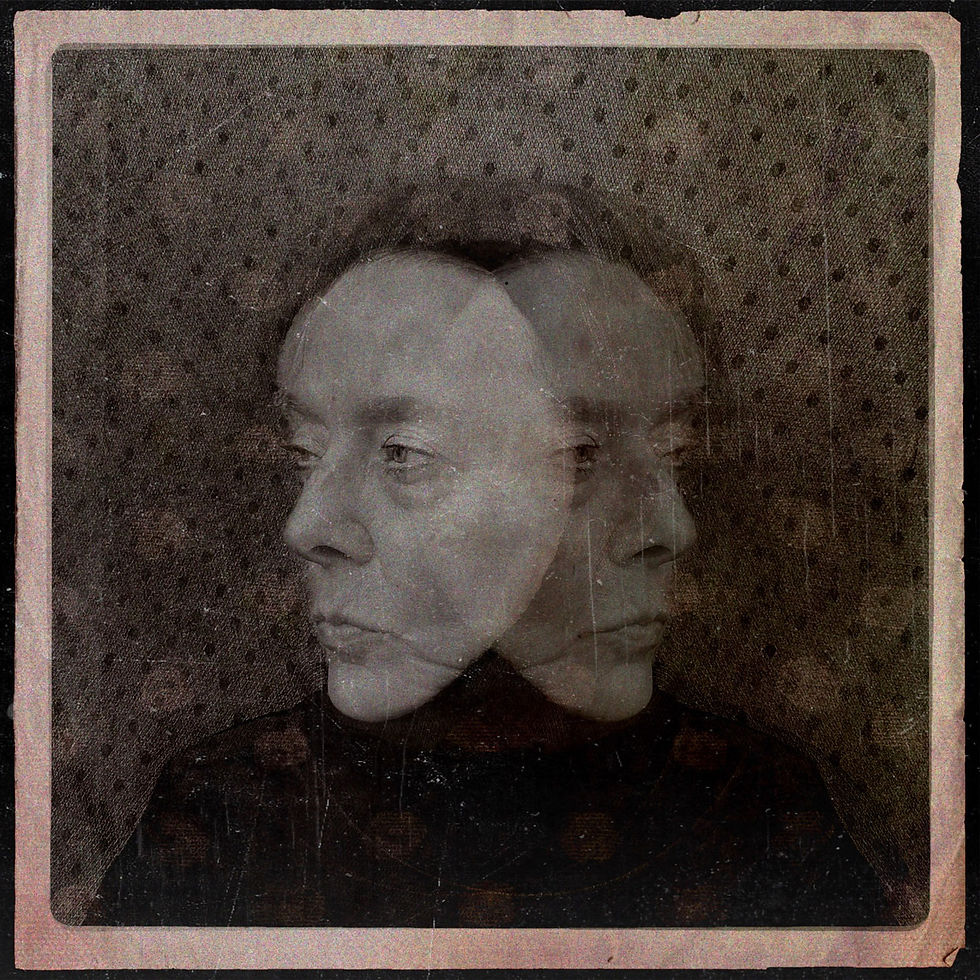
©Susan Bein
© Susan Bein, all rights reserved
There's a lot of waiting in my daily life so I try to use that time creatively; I keep about 300 favorite photos on my phone and use different phone apps to experiment on them even though I initially thought they were 'finished'. Several of these are double exposures, some are blurs; I push and push to see old friends in new ways. The photo of the woman with a lampshade on her head is a good example; I was in a plane sitting on the runway and photographed the lights out the window layering them over some of my older photos during the flight. I've been photographing for 55 years and love that I now have both a camera and a darkroom that can fit in one hand.
Wu Chi-Tsung

© Wu Chi-Tsung

© Wu Chi-Tsung

© Wu Chi-Tsung

@Wu Chi-Tsung

© Wu Chi-Tsung
© Wu Chi-Tsung, all rights reserved
Crystal City Series
Dimensions variable
2009 – 2019
There is another invisible world in which we live each and every day. It is made up of electronic equipment, programs, networks, media and information, and I call it “Crystal City.”
I chose the word “crystal” because this world grows like a crystal, each individual element within it automatically coming together and infinitely expanding and spreading according to a set internal rhythm and logic It is transparent, light, invisible and lacking in volume and yet still projects a world of unparalleled reality.
This is a place I consider our spiritual home.
有另一個不可見的世界,但我們每日生活其中,它是由電子設備、程式、網絡、媒體、訊息所構築,我稱之為《水晶城市》。
用水晶命名,是因為它就像晶體的成長,其中的各個元素,按一定的內在規律與邏輯自動的組構衍生出來,更無盡的蔓延擴張。
它是如此透明、輕盈、不可見又毫無量感,卻投影出另一個無比真實的世界。
那裡是我們精神的寓所。
Sandra Klein

© Sandra Klein

© Sandra Klein

© Sandra Klein

© Sandra Klein

© Sandra Klein

© Sandra Klein
© Sandra Klein, all rights reserved
Meeting the Shadow
As I sit in my garden, I watch life become more and more fragmented – the pandemic, politics, issues of race and ethnicity, personal losses, all contribute to an unhinged surrealism. Here in my garden, I understand that the beauty and decay among the verdure serve as a metaphor for this new world.
In this series, I photograph flora in its decayed state, focusing on light and shadow. I then deconstruct the image, leaving only the shadow. I cling to what is ephemeral, meticulously removing the initial subject, having no idea what will remain. Chance takes over and I begin to have a conversation with silhouettes created by the sun. I cut and sew the now incomplete photographs to create a material object, stitching together what is lost, the fleeting memory of what once was. These fragile efforts portray my psyche during these turbulent times.
While working on this series, I was reminded of the year I spent working with the artist Betye Saar. To create her collages, she cuts shapes out of paper, only to throw them away. She then uses the scraps in her image making, forcing herself to work in the arena of the unexpected. I know that arena profoundly. There is so much in my life that I have been unprepared for and Meeting the Shadow is a metaphor for becoming comfortable with a future I can’t predict.
Nadezda Nikolova

© Nadezka Nikolova

© Nadezka Nikolova

© Nadezka Nikolova

© Nadezka Nikolova

© Nadezka Nikolova

© Nadezka Nikolova
© Nadezka Nikolova, all rights reserved
Elemental Forms: Landscape Rearticulated
Elemental Forms: Landscapes Rearticulated investigates the potential for generating new meaning when the observed manifestation or phenomenon is reconceived as an idea. For example, from the vantage point of geologic time, the solidity and permanence of the landscape can be thought of as an idea; the landscape is in continual permutation over eons. Further, quantum physics treats building blocks of matter as wavelike excitations, and mystics tell us that all matter is energy in vibration. By decomposing the landscape and rearranging the sinuous, organic lines into new compositions, I invite the viewer to form new associations and to envision and claim different possibilities.
Anchored in a deep connection to the landscape and fascination with the photo-based object, my work investigates how observing Nature informs contemplation, perception, and identity. My process involves daily walks to connect with the landscape. I distill the gleaned information into sketches which I then translate into photographic image-objects in the darkroom.
Using light, wet plate collodion chemistry, paper cut-outs, cliché verre, and brushes, I create experimental camera-less compositions through multiple exposures that allude to landscapes, light and atmospheric phenomena, and organic forms found in nature. Rather than transcribing the observed landscape, I seek to record intuitive responses that speak to the felt and ineffable experiences of being fully present in the landscape–to a sense of wonder, awe, and permeating immanence, while simultaneously meditating on loss, hope, and meaning.
Straddling the line between representation and abstraction, the pared down visual vocabulary arises from the immediacy of the photogram as I explore the boundaries of the photographic medium, placing it in conversation with painting, collage, graphic arts, and sculpture. The compositions, ranging in mood from contemplative stillness to dynamism and movement, employ shape, artifact, gesture, and tonal range to explore balance and rhythm.
Linda Plaisted

© Linda Plaisted

© Linda Plaisted

© Linda Plaisted

© Linda Plaisted

© Linda Plaisted

© Linda Plaisted
© Artist, all rights reserved
How the Light Gets In
I use my art practice as a therapeutic form of self-expression and create every day as a visual journal of my life and a response to the cultural zeitgeist. Experimentation is a voyage of discovery for me; a way of finding meaning through the process of play and practice. I think my willingness to show up, try new things and fail on a daily basis is what allows me so much space to flow into whatever comes next. I think Picasso said, "Inspiration exists, but it has to find you working." No wild tangent is off the table as long as it stays true to my overarching mission statement- to be a champion of women and mother Earth.
I created my series How The Light Gets In in response to a good friend's terminal cancer diagnosis, which landed like a grenade amid the constant bombardment of dark and disturbing imagery we have all been subject to over the past several years. Shattered, I was looking for a way to express my own grief and society's collective despair while also searching for some small pinpoint of light in a dark time.
I heard an old Leonard Cohen song one day and his words inspired creative experimentation.
"The birds they sang
At the break of day
Start againI heard them say
Don't dwell on what has passed away
Or what is yet to be
Ah, the wars they will be fought again
The holy dove, she will be caught again
Bought and sold, and bought again
The dove is never free
Ring the bells that still can ring
Forget your perfect offering
There is a crack, a crack in everything
That's how the light gets in"
Ancient peoples once believed that the stars were holes in the sky where departed loved ones looked down on us from above; eyes shining. Knowing that my friend would soon be among those stars, I found great comfort in this simple idea. Layering my original photography, vintage found photos and collected paper ephemera, I then applied a hand-painted dot pattern on top of the natural elements to represent the tiny cracks in everything where light and love can get in and shine out. In this series, the trees and animals represent our eternal connection to the natural world, while the distressed paper scraps- the fragile and fleeting passing away of all things. I am in the studio now further collaging these finished prints onto cradled birch panels after (quite literally) painstakingly poking each image full of hundreds of tiny holes, then finishing the mixed media pieces with paint, encaustic and cold wax medium. It's a multi-step, multi-disciplinary process that synthesizes my studies in photography, fine art, psychology and mythology to alchemize dark materials into light. There is nothing perfect about the work- but this experimentation is my offering to my now-departed friend and to the weary, wounded world.
PhotoBook Journal
The last showcase inclusion of photography books was such a success that I'll be continuing it for this year. Many thanks to Douglas Stockdale, photographer, founder and editor of PhotoBook Journal for once again, curating a wonderful set of photography books where how the artist works with color is an important element.
The reviews are on a separate page, use this link.
